Craft as Language: How to Wrap Five Eggs
Matter & Meaning vol.004
Originally published as Matter & Meaning vol.004. This Journal edition has been adapted from the original mailing and includes selected content from the issue.
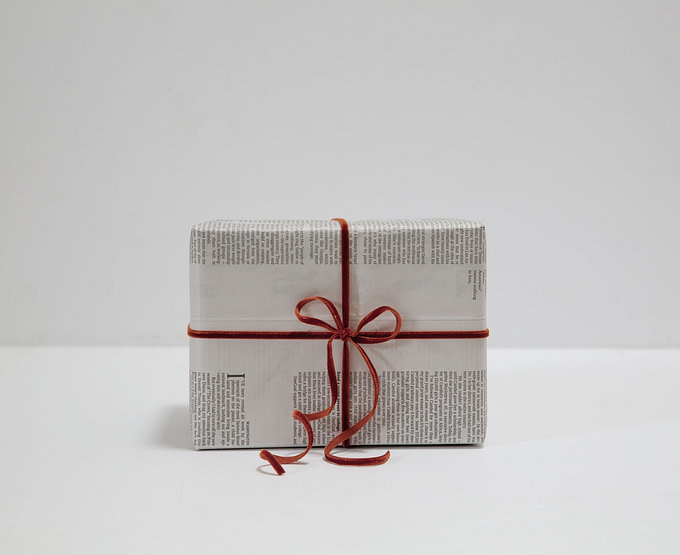
There’s a quiet kind of generosity in how things are made. Not just in the object itself, but in its use—in how it’s wrapped, carried, offered, received. In rural Japan, farmers once carried eggs in straw-woven packages so considered they bordered on poetic. These were not formal designs. They were solutions. But over time, repetition gave them shape, and shape gave them meaning.
This volume turns to How to Wrap Five Eggs—Hideyuki Oka’s photographic and philosophical study of traditional Japanese packaging. Beauty, in these pages, is not an adornment but a consequence of deep attention. The materials are modest: bamboo bark, paper, rice straw. The forms are practical. And yet, what emerges is a kind of artistry. Attention becomes beauty. Utility becomes ritual.
Craft, here, is a language. Not one of spectacle, but of care—passed down, practiced daily, and refined through time. These wrappings aren’t about decoration. They reflect a belief: that even the simplest object deserves intention. That the smallest gesture can carry feeling. And that usefulness and beauty are never at odds.
“Such packages were not products of contemplation, nor yet of theory. They assumed their shapes over years and years of unself-conscious use and experimentation, which is to say that this packaging is one form of Japan’s cultural heritage. It was not perfected overnight: behind each of these humble packages lie generations of art and craft.”
We hope you’ll consider supporting local, independent bookstores and publishing houses. Or your local library. You can purchase How to Wrap Five Eggs from your local bookstore.
SUBSCRIBE TO MATTER & MEANING
Receive new issues in full.